What Ontario's OHSA Says About Washroom Maintenance
The Occupational Health and Safety Act (OHSA) places a broad duty on Ontario employers to maintain a safe and healthy workplace. Several regulations under OHSA address washroom cleanliness and sanitation directly:
- Ontario Regulation 851 (Industrial Establishments) — Requires that sanitary facilities be kept clean and in good repair.
- Ontario Regulation 67/93 (Health Care and Residential Facilities) — Sets specific standards for sanitation and housekeeping, with requirements for documented cleaning procedures.
- Public Health inspections — Under the Health Protection and Promotion Act, inspectors in food service, schools, and healthcare settings regularly review documented cleaning records.
The key requirement across all of these: employers must not only maintain clean washrooms — they must be able to demonstrate they are doing so consistently.
Who Does This Apply To?
These requirements apply to any Ontario employer who provides washroom facilities to workers, visitors, or the public. That includes:
If you have employees and you have washrooms, OHSA applies to you.
What Records Must You Keep?
OHSA does not prescribe a single mandatory log format. However, enforcement expectations and best-practice guidance from the Ministry of Labour, Immigration, Training and Skills Development (MLITSD) and public health units have converged around a consistent set of documentation standards. Your cleaning records should capture:
For each cleaning visit
- Date and time of the cleaning
- Name or identity of the cleaner who performed the task
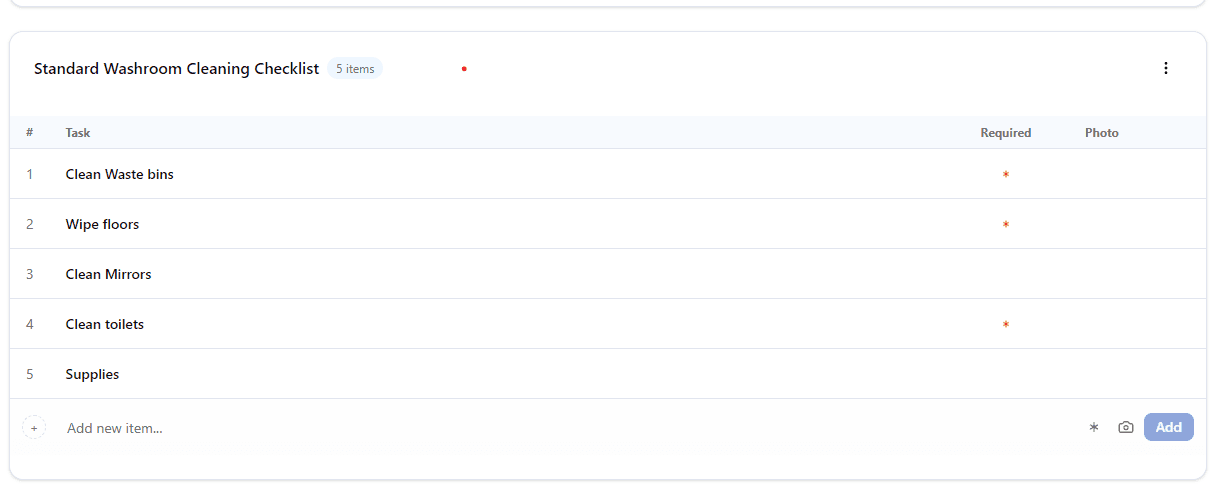
- Tasks completed (toilets, sinks, floors, mirrors, supplies, waste bins)
- Condition noted — any damage, broken fixtures, or hygiene issues
- Supervisor review where applicable
For the facility overall
- Cleaning schedules showing how often each washroom is cleaned
- Evidence that actual cleaning frequency matches the schedule
- Corrective actions taken when issues were identified
- Training records for cleaning staff
Where Must Records Be Available?
Requirements vary by sector and facility type, but general enforcement expectations in Ontario include:
Posted in or near the washroom
A visible cleaning record — physical or accessible via QR code — lets supervisors, auditors, and visitors see the cleaning history at a glance.
Available to inspectors on request
Under OHSA, MLITSD inspectors have the right to request records during an inspection. You must be able to produce them promptly — not in a week, not by hunting through filing cabinets.
Accessible to Joint Health and Safety Committees
In workplaces with 20 or more employees, your JHSC may request cleaning and maintenance records as part of their health and safety oversight responsibilities.
Retained for an appropriate period
While OHSA does not specify a universal retention period for cleaning logs, guidance from public health units recommends retaining records for a minimum of 12 months. Consult your sector-specific regulations and legal counsel for your specific obligations.
Paper Logs vs. Digital Cleaning Logs
The clipboard on the back of the door was the standard for decades. It is no longer the most reliable option — and in regulated environments, it can become a liability.
Paper logs are a snapshot. Digital logs are a living audit trail. When an inspector asks for 6 months of cleaning records, which would you rather hand them?
How Komplio Supports OHSA Compliance
Komplio is a washroom cleaning management platform built for Ontario facility managers, janitorial companies, and property managers. Here is how each feature maps to what OHSA record-keeping expects:
QR Code Check-In — Proof of Presence
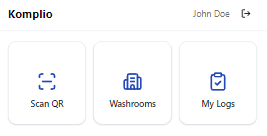
Cleaners scan a QR code posted at each washroom entrance to begin a log entry. The scan creates a timestamped record tied to that specific washroom — eliminating backdating and confirming the cleaner was physically present at the location.
Structured Checklists — Nothing Gets Skipped
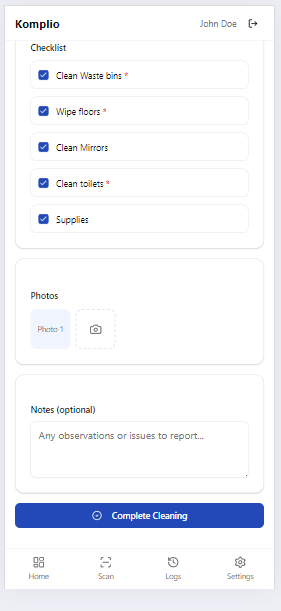
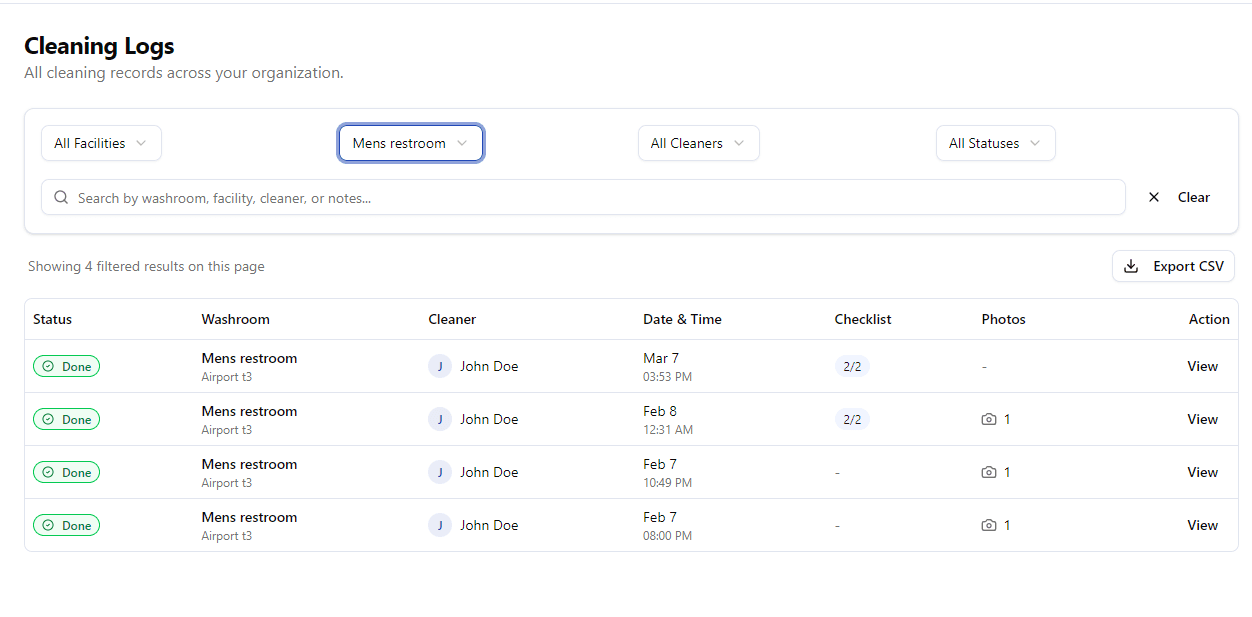
Every cleaning visit follows a predefined checklist: toilets, sinks, floors, mirrors, soap dispensers, waste bins. Each task is recorded and timestamped. The result is a complete log of what was checked, not just a signature on a sheet.
Photo Evidence — See the Result, Not the Checkbox
Cleaners can attach photos directly to a log entry. Photos are stored against your organization's account and retained with the log. This provides verifiable evidence of the condition of a washroom at the time of cleaning — something a paper log cannot offer.
Scheduling — Document Your Cleaning Frequency
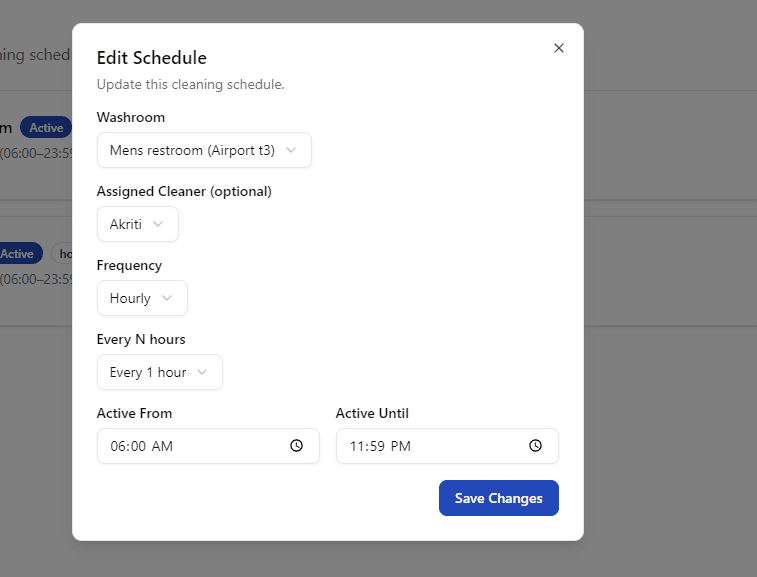
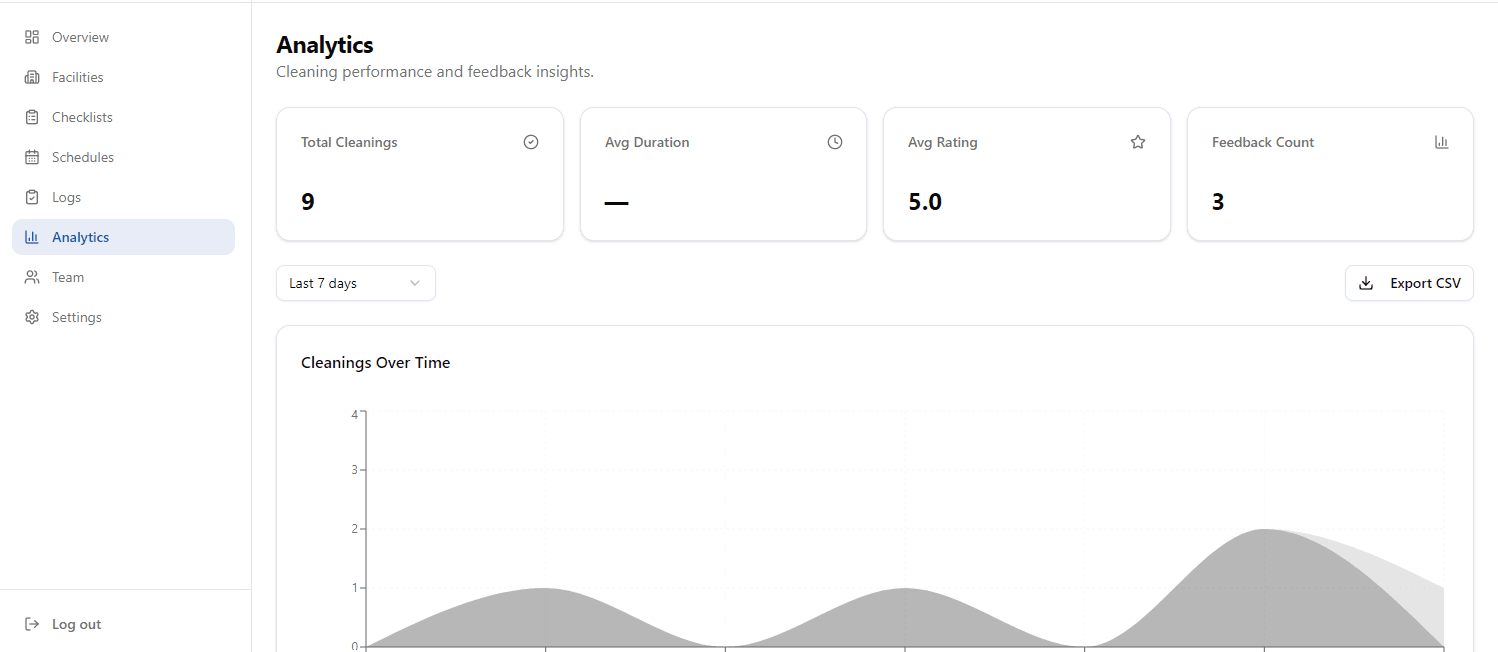
Set recurring cleaning schedules, assign cleaners by washroom or zone, and see which cleanings are completed or overdue on your dashboard. A documented schedule is one of the first things an MLITSD inspector will ask for — with Komplio it is always up to date.
Inspector-Ready Reports — Produce Records in Seconds
When an inspector walks in or your JHSC requests records, you can export a complete cleaning history — filtered by date, washroom, or cleaner — as a CSV file. No scrambling through binders, no missing entries.
Offline Mode — Works in Dead Zones
Cleaners can log work without internet — in basements, underground car parks, or any area with poor signal. Logs are queued locally and sync automatically when connectivity returns. No log is lost due to connectivity.
Visitor Feedback — Catch Issues Before They Become Complaints
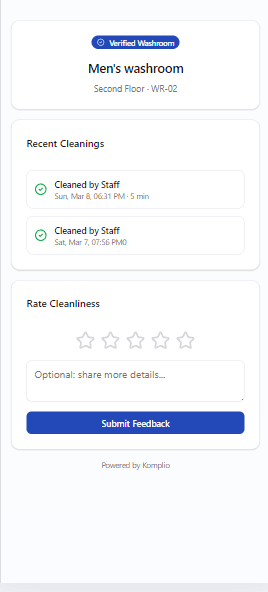
Visitors scan the same QR code to rate the washroom and flag problems. Feedback arrives in your dashboard in real time — so you can respond before a hygiene issue becomes a public complaint or a regulatory concern.
Ontario OHSA Washroom Compliance Checklist
Use this checklist to assess your current compliance posture. This is a practical guide based on OHSA requirements and enforcement best practices — not a substitute for legal advice.
Documentation
Cleaning Frequency
Staff Accountability
Facility Condition
Inspector Readiness
The Risk of Non-Compliance
Failing to maintain adequate washroom records in Ontario carries real consequences:
MLITSD compliance orders
MLITSD inspectors can issue compliance orders requiring immediate corrective action. Orders are published on the Ontario government's public inspection results database — visible to clients, tenants, and the public.
Joint Health and Safety Committee escalations
Workers or JHSC members can escalate non-compliance issues to the Ministry if they believe cleaning standards are not being maintained or documented.
Failed audits and lost contracts
An unsigned log or missing cleaning record during a client audit can mean a failed inspection, a penalty, or a lost facilities management contract.
Legal exposure
If a worker or visitor becomes ill and you cannot demonstrate due diligence, documented cleaning records are your first line of defence. Without them, establishing that reasonable steps were taken becomes significantly harder.
Frequently Asked Questions
Common questions from Ontario employers about OHSA washroom cleaning log requirements.
What does OHSA require for washroom cleaning records in Ontario?
Under O. Reg. 480/24 (made under OHSA), Ontario employers must maintain records documenting when washrooms were actually cleaned — not just when they were scheduled to be cleaned. Records must show the date and time of each cleaning, who performed the cleaning, and the specific washroom. Records must be posted where workers can access them and retained for at least 12 months.
When did Bill 190 / O. Reg. 480/24 come into force?
The washroom cleaning record requirements under O. Reg. 480/24 came into force on January 1, 2026. All Ontario employers with washroom facilities for workers are required to maintain and post cleaning records from that date forward.
Does a cleaning schedule satisfy O. Reg. 480/24?
No. A posted cleaning schedule showing when washrooms are planned to be cleaned is not sufficient. The regulation requires records documenting that cleaning was actually completed — each entry must confirm that cleaning occurred, not just that it was scheduled.
How long must washroom cleaning records be kept under OHSA?
O. Reg. 480/24 requires Ontario employers to retain washroom cleaning records for a minimum of 12 months. Records must be accessible to workers and available to MLITSD inspectors on request.
What are the fines for non-compliance with Bill 190 washroom requirements?
Under OHSA, corporations can be fined up to $100,000 per offence, and each non-compliant washroom can be treated as a separate offence. Compliance orders are published on Ontario's public inspection database — visible to tenants, clients, and potential customers.
Does O. Reg. 480/24 apply to all Ontario employers?
Yes. O. Reg. 480/24 applies to all Ontario employers who provide washroom facilities to workers — regardless of industry, sector, or number of employees. Construction sites and workplaces where only the employer works (sole proprietors with no workers) may be exempt; consult a compliance professional for guidance specific to your situation.
Disclaimer
This article is intended for general informational purposes only and does not constitute legal or regulatory advice. Obligations under OHSA vary by sector, workplace type, and facility. Consult a qualified legal or compliance professional for guidance specific to your organization. Komplio is a management and record-keeping tool and does not replace professional hygiene audits or regulatory compliance assessments.